
Quant & qual research · Activation
Mixed method activation study
Led a mixed-methods study after data showed a high number of new desktop users and an even higher number of new mobile users never returned after their first Studio session. Quantitative activation segmentation plus 2 rounds of qualitative remote in-depth interviews drove 2 shipped changes: extended event tracking beyond the initial one-week window to reflect real, sporadic creation behavior, and optimized CTAs, upgrade prompts and onboarding flow to increase desktop and mobile retention.
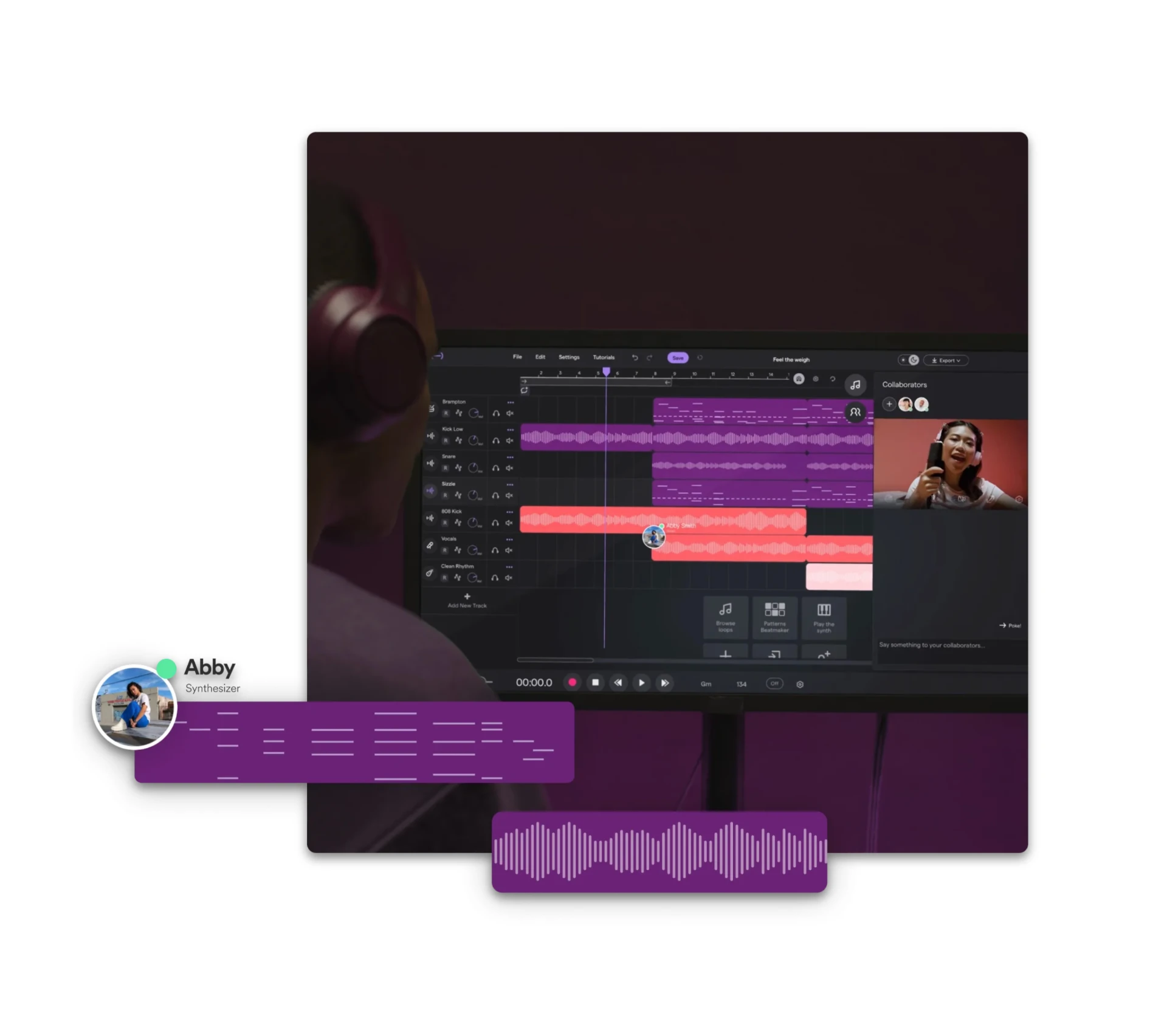
What Soundtrap is. Soundtrap is an online digital audio workstation (DAW) for music creation (B2C and EdTech).
Rationale for this study. Starting from the Activation segmentation analysis that was performed by data scientist while setting the OKRs in the product teams. We identified knowledge gaps in understanding ‘why’ the decline in activation is happening with new users. To address this, the study combines quantitative segmentation analysis and qualitative remote, in-depth interviews to uncover the underlying causes of early drop-off.
Business Problem — Where to invest? We have a big challenge with activating our new users. On desktop 78% of new users never return to use Soundtrap after they first entered the Studio. For mobile this number is even higher (85%). We also seen a worrying trend in the quantitative data the past two years that fewer users are activating, and even worse during 2021.
Research Goals? ⭐ Surface key pain points and opportunities in early Studio interaction. ⭐ Identify strategic areas to improve activation and drive engagement.
Why is activation declining with new users?
TODO — add copy: the business + user problem, and what you got wrong.
TODO — add copy: your scope, influence and what you initiated.
TODO — add copy: the decision you took, before the solution.
Part 0: Quantitative activation segmentation analysis performed by data scientist. Starting from the Activation segmentation analysis that was performed while setting the OKRs in the product teams.
Part 1: Qualitative remote in-depth user interviews by User Researcher (me).
Recruitment criteria. I recruited these participants based on user behavioral data requirements and a screener survey. Round 1: users who did onboard, and return later. Round 2: users who didn’t onboard, but return later.
My approach during the interviews. Let the participant walk me through their first project they made on Soundtrap.
Part 2: Analysis week and final delivery in close collaboration with the data scientist. Insight presentation to company wide teams and stakeholders.
Challenges this study faced. Quantitative — missing data events: some events lacked tracking which made it more difficult to get a complete picture of the initial experience. Analysing non-existent behaviour: since the nature of the problem is related to users who don’t do anything in the studio, it becomes a challenge to get data on why they leave. Qualitative — for Round 2 we needed to re-strategize the user group, due to no response rate on ‘users who didn’t onboard, but return later’ (did not onboard, spent less than 15 minutes in the first 24h; came back to Soundtrap both week 1, day 7-13, and week 2-3, day 14-28).
This study delivered impact across device experience, user motivation patterns, and subscription flow.
🔍 1. Tracking & Metrics Calibration. We discovered music creation is sporadic, it spikes when inspiration hits. To capture this, we extended tracking beyond the initial one-week window to reflect real user behavior.
🔍 2. Onboarding & Conversion Optimization. Many new users drop off before gaining confidence in the Studio, even with free access. By understanding their early hesitation, we optimized CTAs, upgrade prompts, and onboarding flow to increase desktop and mobile retention ↗︎.
Metrics redefined. More accurate tracking aligned with user behaviour.
Onboarding improved. Confidence-building moments introduced to reduce churn.
Messaging refined. Marketing and product now focus on trust.
TODO — add copy: what you would do differently.